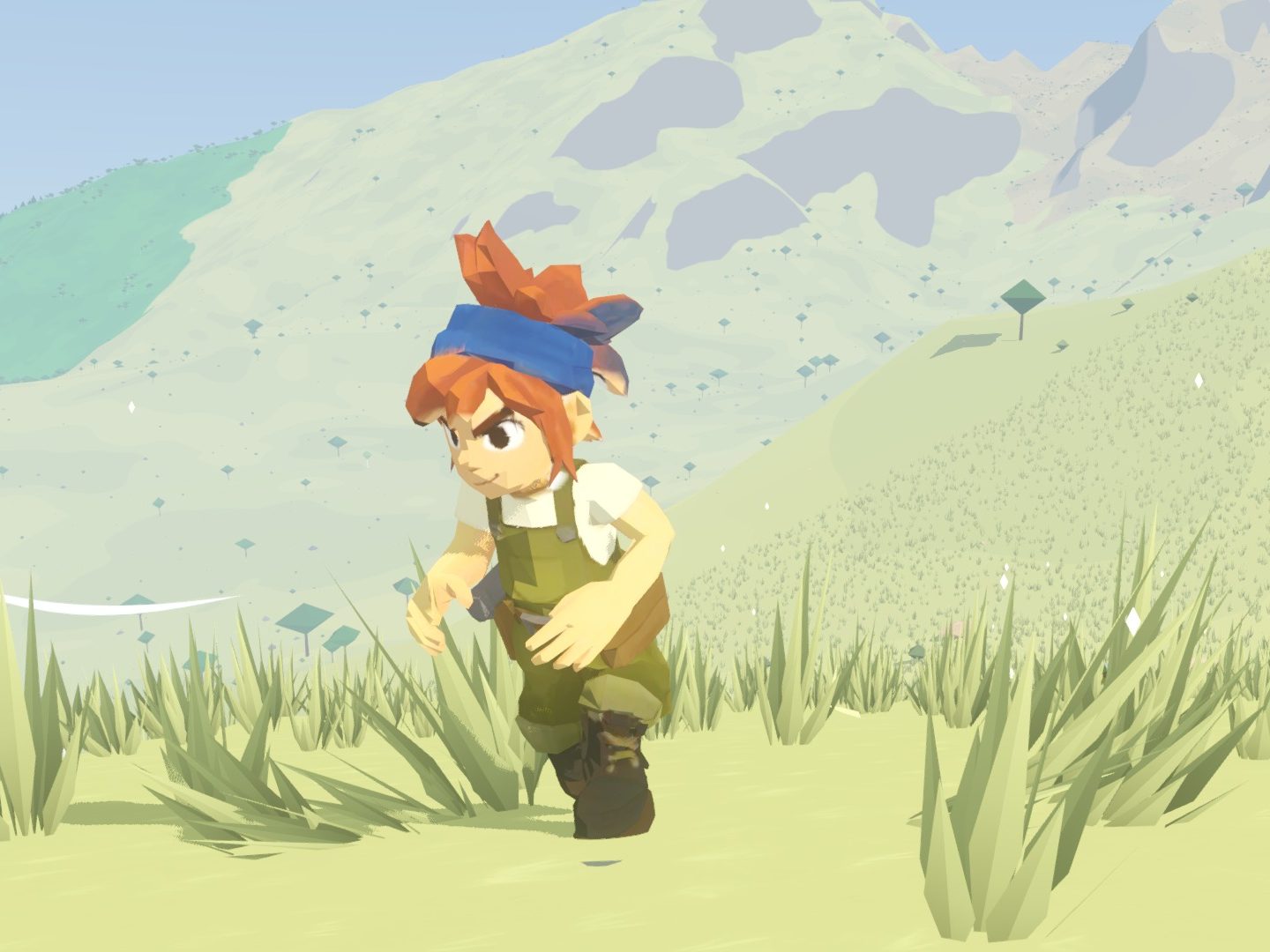
Pebble Planet is a survival and crafting game set on a planet you can walk all the way around: 10 km in radius, about 63 km around the equator. You land with nothing. You read the colour of the rocks, the plants and the rivers to guess what is where, then gather, craft, dig, build, and get through cold nights, thirst and hunger.
The planet comes from B-PCG, the planet generator my capstone team at Chung-Ang University is building. It works the planet out from plate motion, rainfall and river erosion instead of drawing it from noise, so every river reaches the sea and every rock layer has a reason to be where it is. Pebble Planet reads that planet and turns it into a game.
Work started on November 15, 2026. Every screenshot on this page comes from the current build, with all the models, textures and sounds made so far in place. The one at the top is from the closing shot of the game’s own camera tour, which flies over the planet and stops in each biome.
My role
A solo project: the game design, the game code in C#, the pipeline that makes the models and sounds, and the tools that test it all. B-PCG is a team project; I added the fields the game needed, such as biomes, ore deposits and the sea floor, on feature branches of its repository.
How it was built
The budget came first. Before any content went in, I fixed the limits: every frame within 16.7 ms (60 fps), no hitch longer than 50 ms, memory under 4 GB. A benchmark flies a fixed path over the planet and checks them. The whole planet is drawn in terrain chunks that get coarser with distance, and chunks behind the horizon are skipped. On a MacBook Air M3 the bare terrain, from walking on the ground up to orbit, stayed under 8 ms for 99% of frames.
Ground you can dig. Near the player the ground turns into 1 m voxels that can be dug while you play. They are built on another thread, so walking never stutters. Digging down shows the rock layers B-PCG worked out for that depth, and a pickaxe cuts tunnels, ramps and shafts you can walk through.
The land decides what lives where. The planet has nine biomes, from ice fields to rainforest. Each of the 96 kinds of plants and 73 kinds of animals has a placement rule that names the land values behind it: temperature, rainfall, rock, distance to water. Nothing is scattered without one. Gold flakes turn up in river sand only downstream of a gold-bearing vein, the way placer gold forms on Earth, and copper ore shows as green-stained rock.
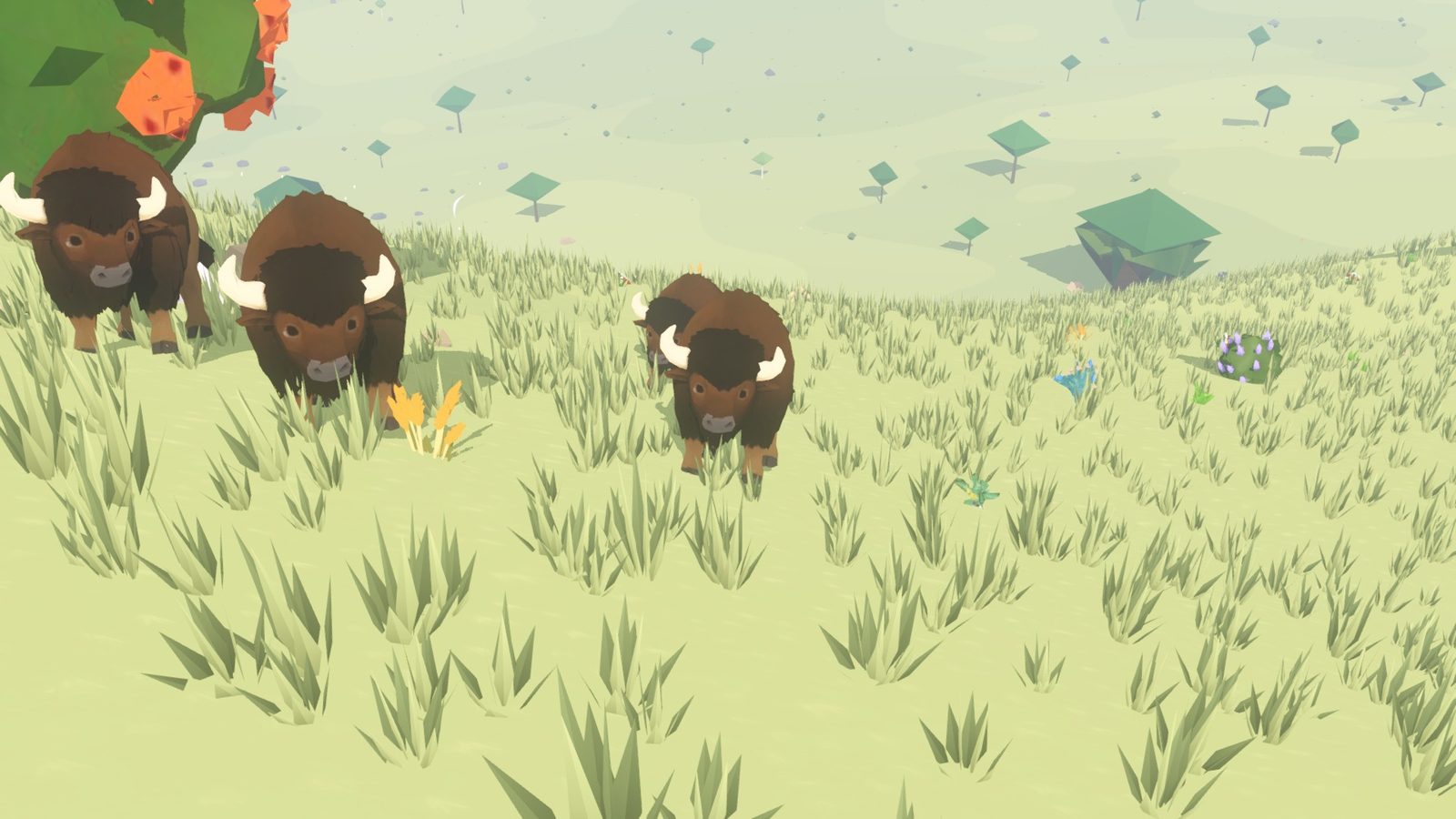
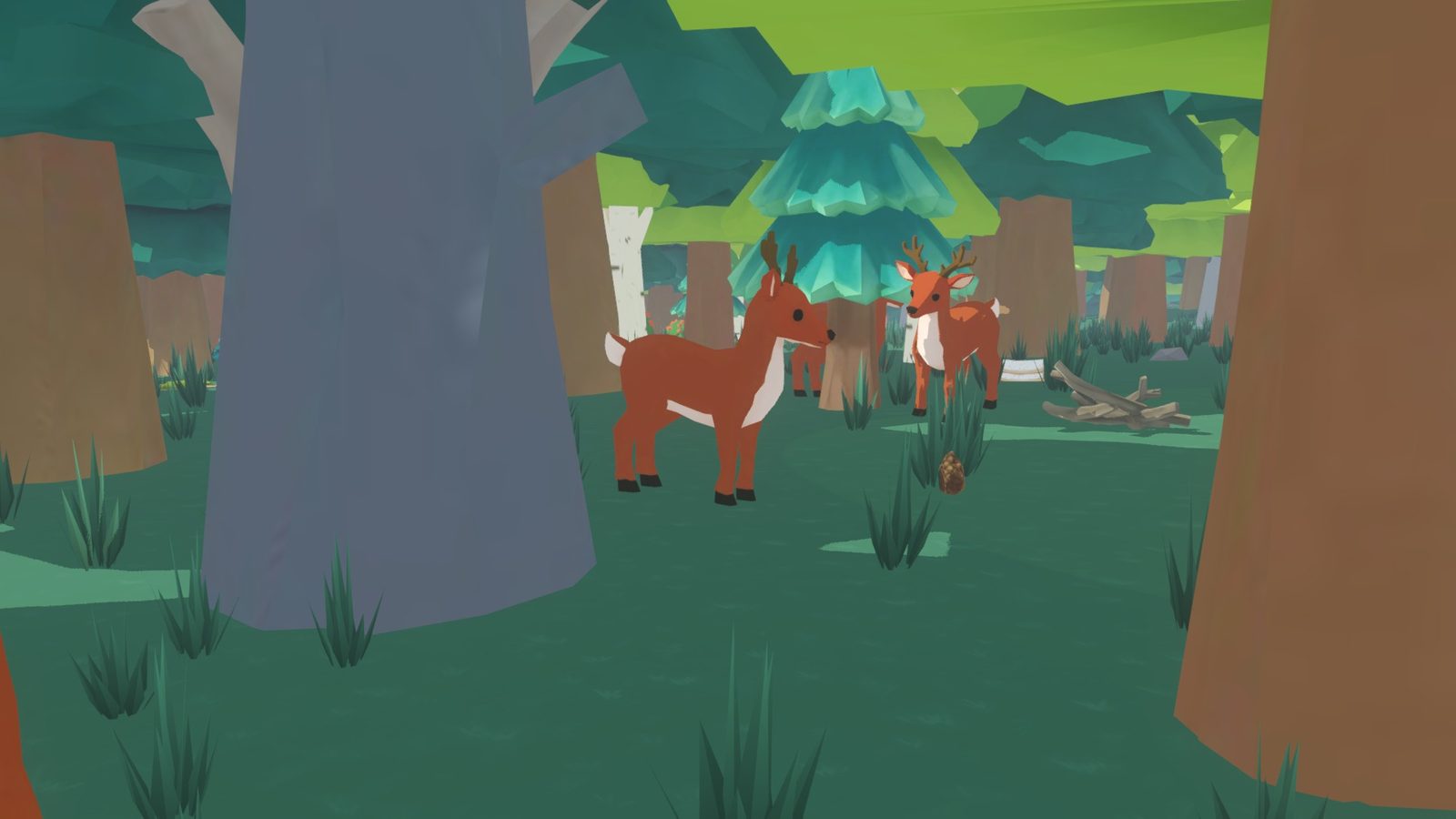
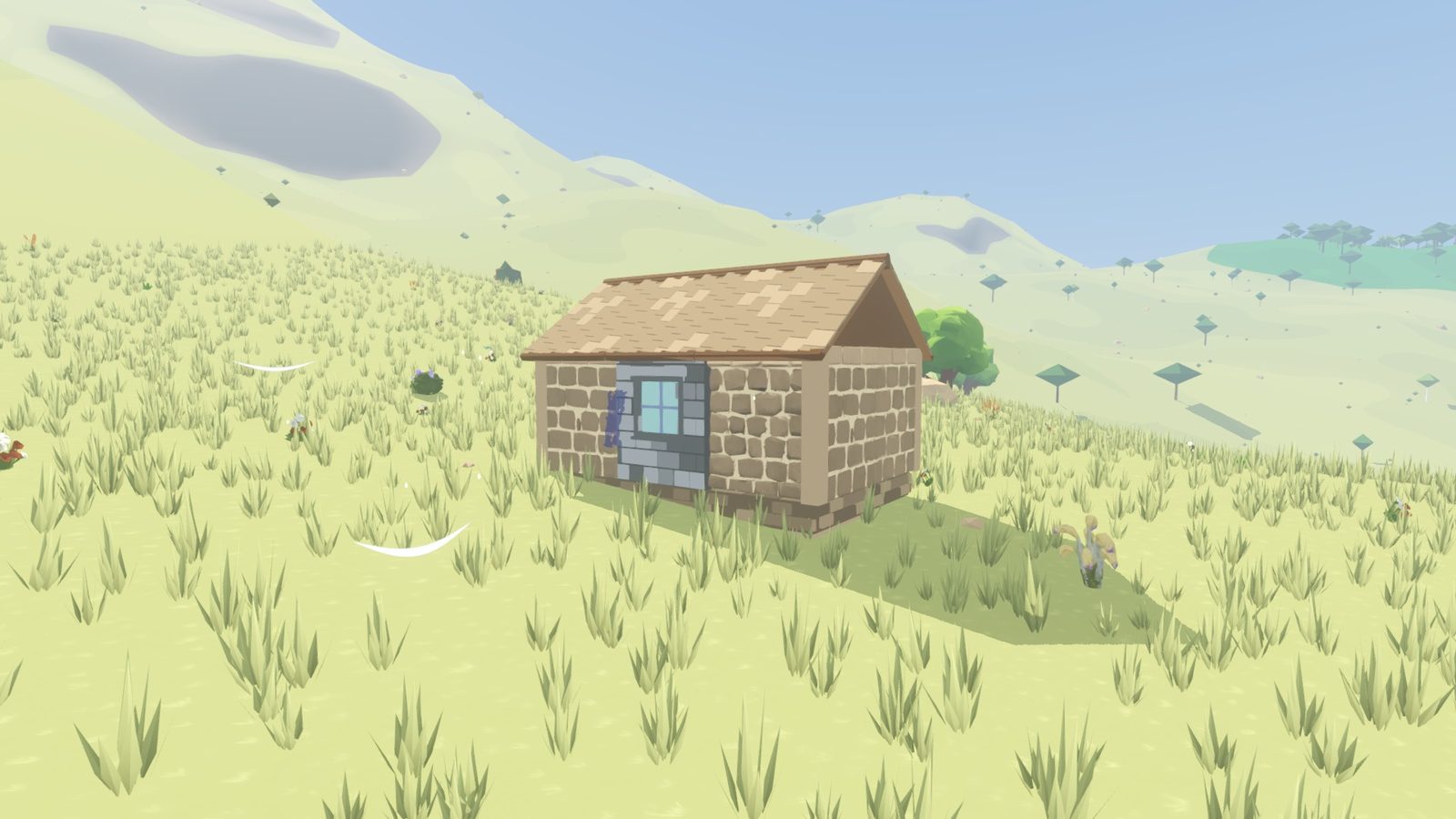
Getting through the day. A day lasts 20 minutes. Health, fullness, water and body warmth change with the local temperature and the hour. There are 287 items and 213 recipes, from a stone axe up to copper and iron tools. Breaking a rock gives a piece of whatever rock is there, and walls and roofs built from it keep its colour, so the same house comes out pinkish grey on granite and ochre on sandstone. A shelter is graded from 1 (a hut) to 6 (a good house) by its size, floor, windows, fire and bed.
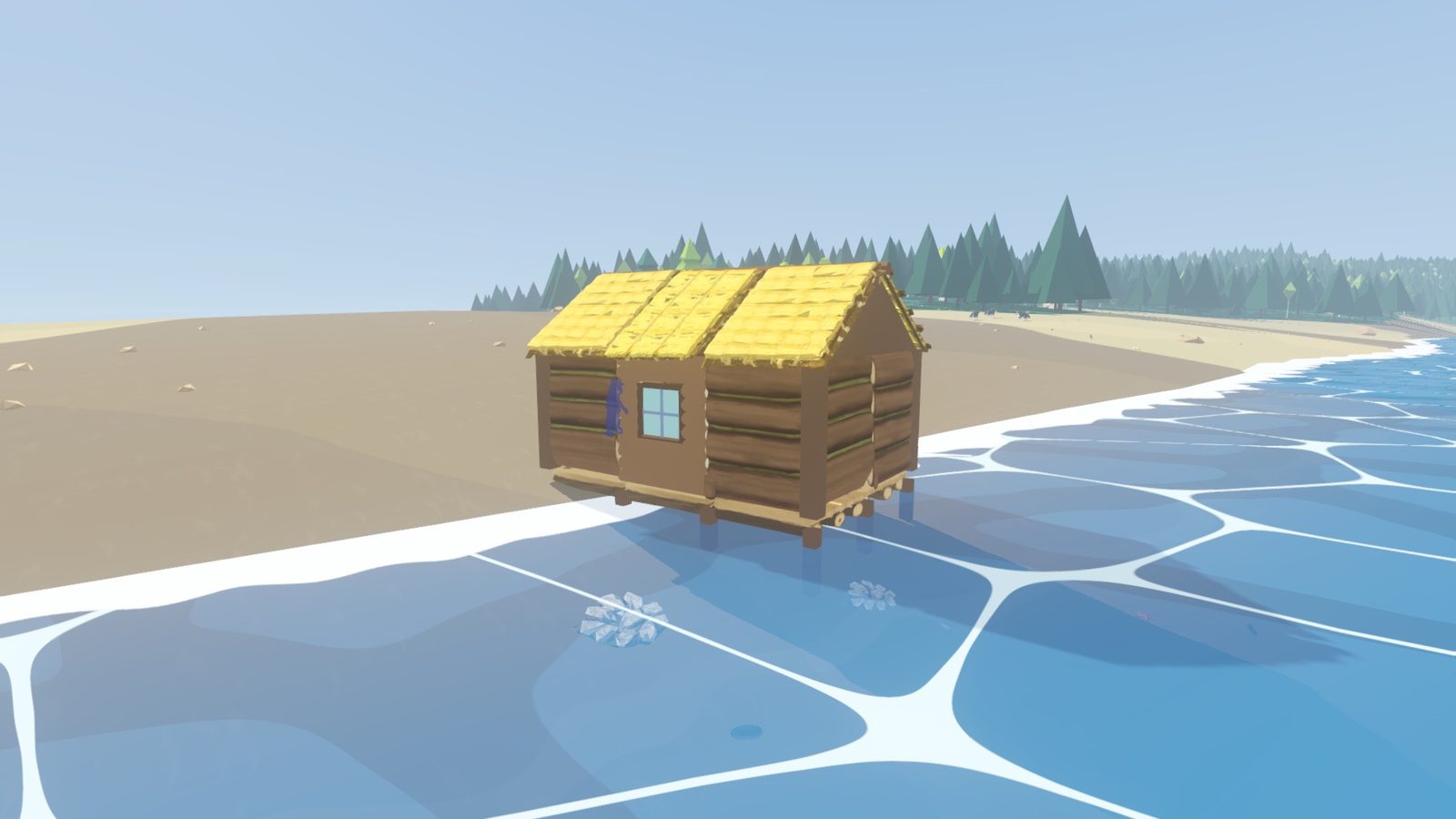
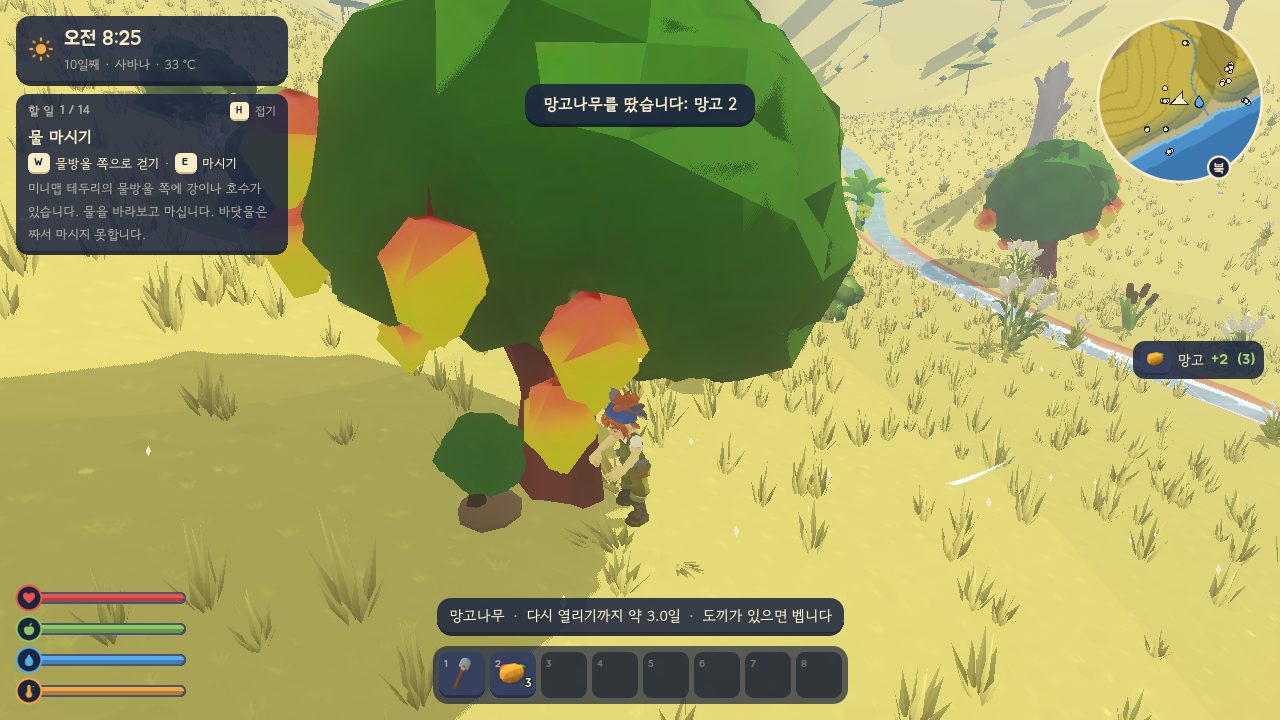
Farming and planting. Fields take a dozen crops, from wheat and barley to taro, squash and cotton. Each crop ripens by adding up warmth day by day from the local temperature and season, using values from real crops, and dry land needs watering. Trees grow from acorns, cones and cuttings, and eight fruit trees bear fruit only where their winter cold, summer heat and dryness fit.
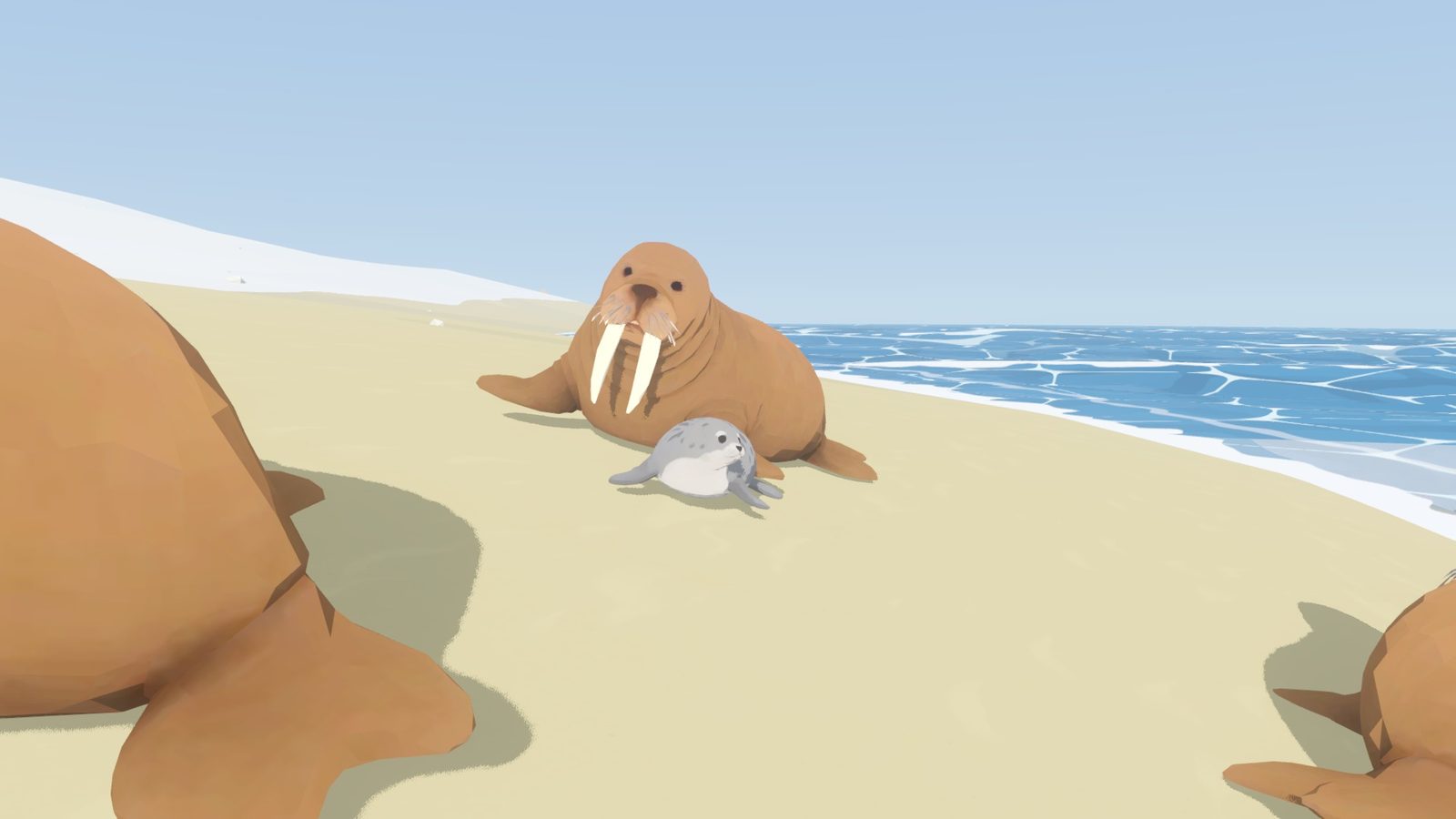
The sea. You can swim, then dive with 45 seconds of breath. The sea floor splits into 11 kinds of places, such as rocky shores, seagrass meadows, kelp forests and coral reefs, read from B-PCG’s water temperature and floor type. Jellyfish sting, big sharks follow you in deep water, and dolphins circle you.
Start where you like. A new world opens on a globe of the planet, painted in the same biome colours as the ground. You spin it, zoom in and pick a spot. Click the sea and it moves you to the nearest low shore.
Models from recipes. Plants, animals, structures and items are generated 3D models. Each object is first drawn from several angles, and only goes on to 3D when the angles really differ. Blender scripts then clean the mesh, add bones and animate it. Every asset keeps a recipe file with what went in and its licence. Sound effects are synthesized in code, and six ambient layers (sea, river, lake, heights, caves, underwater) follow where you stand.
Same seed, same world. All randomness comes from B-PCG’s integer hash, so a seed rebuilds the same planet with the same forests. A save file holds only the seed and what the player changed.
Bots that play it through. Scripted players run the main loops without a person: drink from a river, make a stone axe, build a hut and get through the first night; raise a house to grade 6; dive and touch the sea floor; plant and harvest crops and fruit trees. Each run ends in a pass or a fail, so a change that breaks a loop shows up at once.
Where it is now
Pebble Planet is not released yet. The first-session loop of water, stone axe, shelter and first night works from start to end, and the land, sea, digging, building and farming systems are in. Next come play tests with real players and more balancing.
Focus: procedural worlds · performance budgets · content rules from geology · asset pipeline